
8 Kitchen Layout Ideas to Improve Functionality and Transform Your Space
The kitchen is the busiest room in any home, where meals come together and people naturally gather, no matter how big the living room is. So when you’re planning a remodel, the layout matters more than the cabinet color or faucet finish; it determines how the entire room actually works.
A great layout improves workflow, makes the most of your storage, and turns a cramped kitchen into one you enjoy cooking in. Before picking a backsplash tile, it’s worth understanding the layout options available and which one fits your space, habits, and budget.
Why Layout Matters: The Kitchen Work Triangle
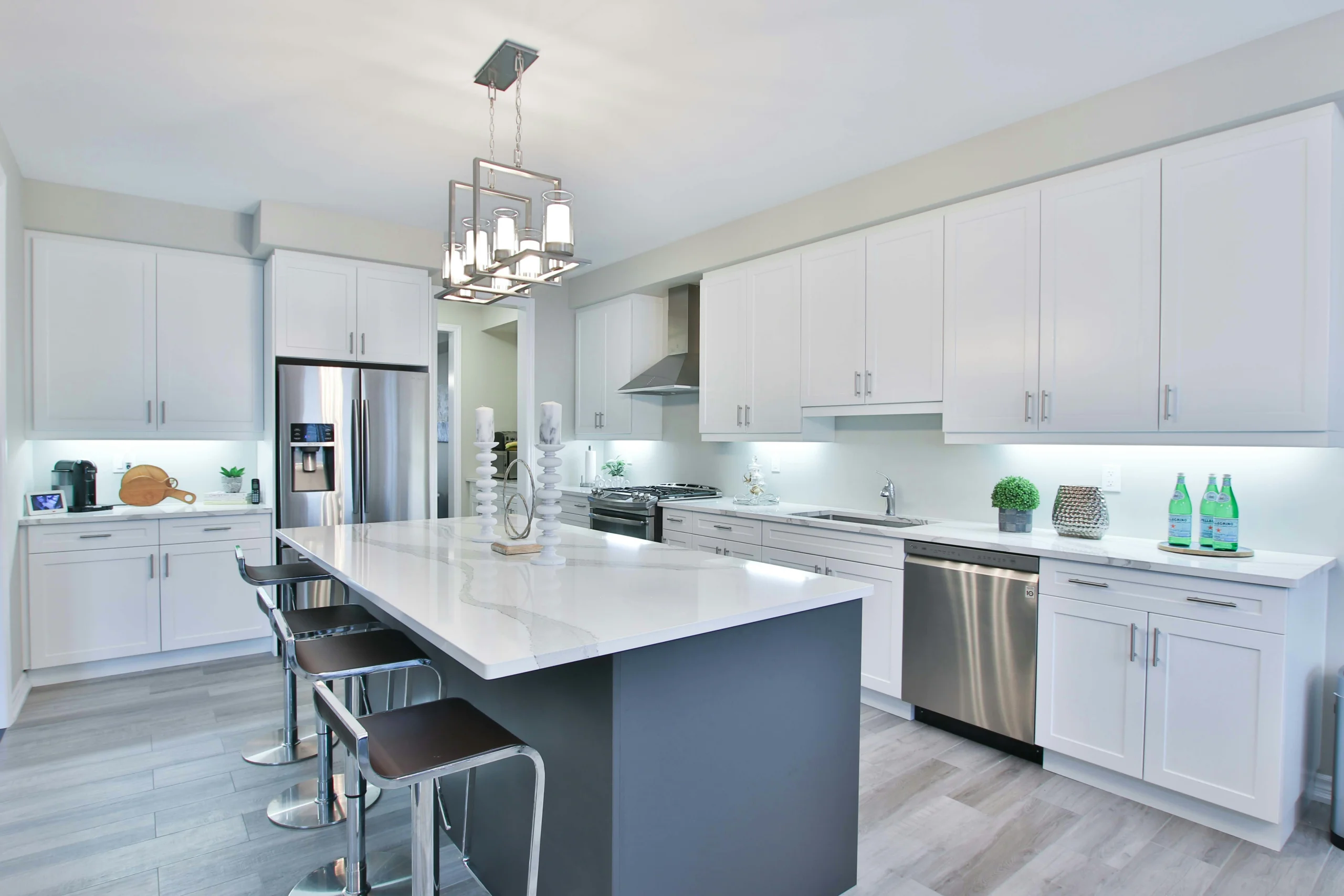
Every functional kitchen is built around the work triangle, the relationship between your cooktop, sink, and refrigerator. These three points should be close enough to move between easily, but spaced out enough that multiple people aren’t tripping over each other while cooking.
A few rules to keep in mind:
- Mind your clearances. Leave at least 36–42 inches of open space around islands and walkways.
- Keep major appliances out of traffic paths. A dishwasher or oven door swinging into a busy walkway creates daily friction.
- Plan storage early. Deep drawers and pull-out shelves are easier to design in from the start than to add later.
With those basics covered, here are the eight most common kitchen layouts: what they offer, who they suit, and how to get the most out of each.
8 Kitchen Layout Ideas to Improve Functionality
1. L-Shaped Kitchen
Cabinets and countertops run along two adjoining walls, forming an open, flexible workspace, one of the most popular layouts in remodeling.
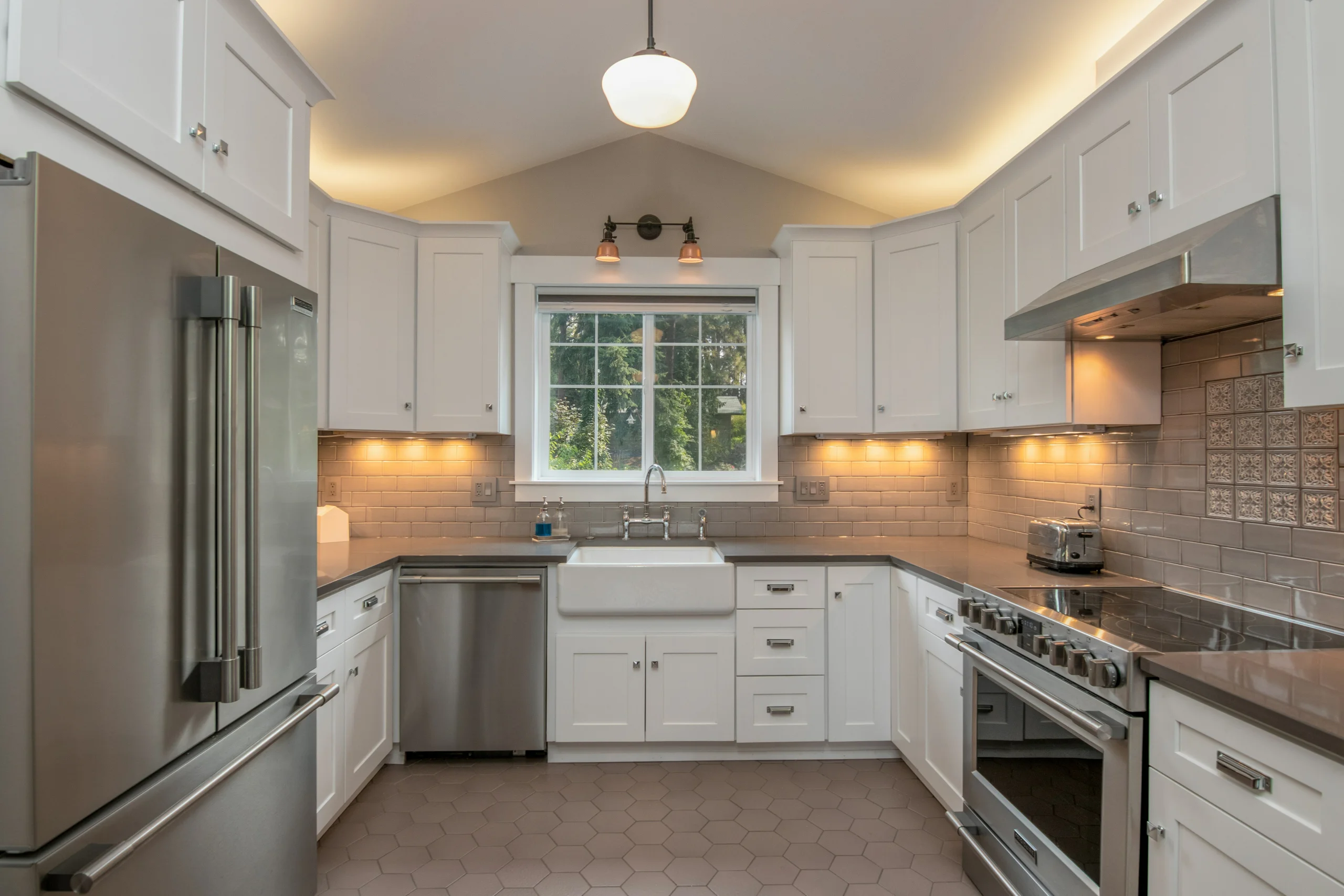
Benefits:
- Keeps the space open and connected to adjoining rooms
- Leaves room for an island if the floor plan allows
- Adapts well to small and large kitchens alike
Best for: Open-concept homes that need to flow naturally into a dining or living area.
Design tip: Extend cabinets to the ceiling and mix in open shelving on one section to keep the L-shape from feeling boxy.
2. U-Shaped Kitchen
This layout wraps cabinets and counters around three walls, surrounding the cook with storage and workspace on nearly every side.
Benefits:
- Maximizes counter space and storage
- Keeps everything within arm’s reach
- Creates a clearly defined cooking zone
Best for: Households with more than one cook, or anyone wanting serious storage without expanding the footprint.
Design tip: Balance the enclosed feel with lighter cabinets or open shelving on one wall, plus under-cabinet lighting.
3. Galley Kitchen
Two parallel countertops with a walkway between them, a design borrowed from restaurant kitchens, where efficiency is everything.

Benefits:
- Minimizes walking distance between appliances
- Makes the most of a small or narrow footprint
- Creates a clean, focused cooking workflow
Best for: Apartments, condos, and older homes where space is limited but efficiency still matters.
Design tip: Use glass-front cabinets or glossy tile to bounce light around. Galley kitchens can feel tight, and reflective surfaces open them up visually.
4. One-Wall Kitchen
Every cabinet, appliance, and countertop lines a single wall, often paired with an island or small dining table opposite it.
Benefits:
- Saves space without sacrificing function
- Creates a clean, minimalist look
- Works well with sleek, integrated appliances
Best for: Studios, lofts, or open great-rooms where one wall is all you have to work with.
Design tip: Go full-height with cabinetry to recover storage, and pair it with slim, built-in appliances for a streamlined finish.
5. Kitchen Island Layout

Adding an island, usually alongside an L-shaped or U-shaped base, adds extra counter space, storage, and a natural gathering spot.
Benefits:
- Additional prep space without changing the perimeter layout
- Casual seating for family or guests
- Extra storage through built-in cabinets or drawers
Best for: Families who want a casual eating spot, or anyone who entertains and wants guests gathered in the kitchen itself.
Design tip: An island can also house a cooktop, sink, or beverage fridge, splitting cooking and cleanup across two zones instead of one.
6. Peninsula Kitchen
A peninsula works much like an island but stays connected to a wall or cabinet run, offering similar benefits in a smaller footprint, sometimes called a G-shaped layout when it extends from a U-shape.
Benefits:
- Adds seating and prep space without a full island
- Helps define the kitchen area in an open floor plan
- A practical alternative when a freestanding island won’t fit
Best for: Kitchens that need extra counter space and casual seating but lack room for a full island.
Design tip: A waterfall countertop edge on the peninsula adds a high-end look while keeping the footprint compact.
7. Open-Concept Kitchen
This layout removes the walls between the kitchen, dining, and living areas entirely, creating one continuous space built around flow.
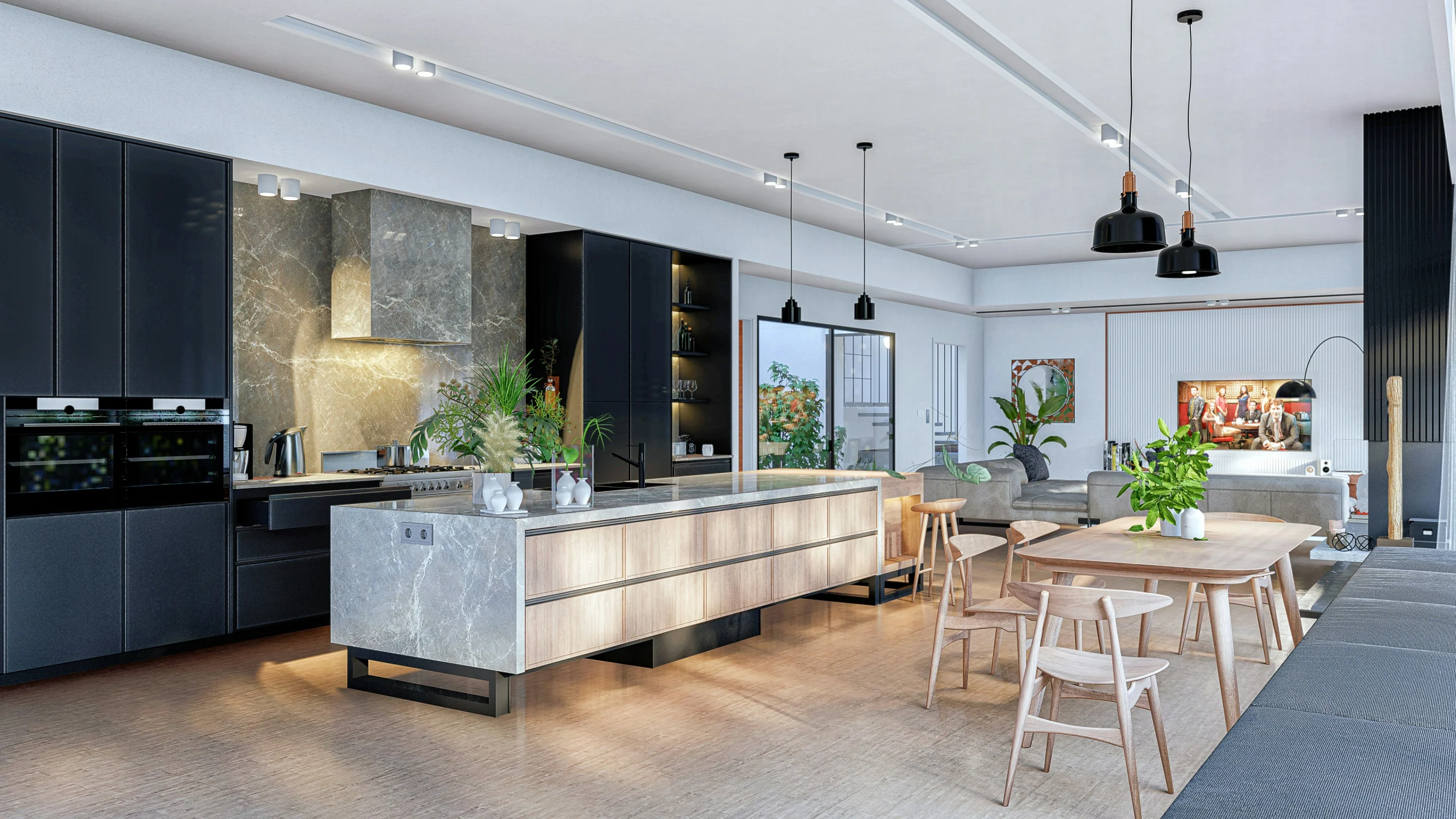
Benefits:
- Makes a smaller kitchen feel significantly larger
- Ideal for hosting, since cooking and socializing happen in the same space
- Often built around an island as the visual centerpiece
Best for: Homeowners who entertain often or want the kitchen to feel like part of the home’s main living area.
Design tip: Paneled appliances that blend into the cabinetry keep the look seamless, since there’s no wall to separate the kitchen from living space.
8. Double-Island Layout
In larger kitchens, a second island can replace one oversized island, splitting the space into distinct zones: one for food prep, one for seating and serving.
Benefits:
- Separates prep work from dining and entertaining
- Improves traffic flow by giving people more than one path through the room
- Adds significant counter space and storage
Best for: Larger homes with the square footage to support two islands, especially households that cook together or host frequently.
Design tip: Keep the inner island focused on function (sink, cooktop, prep space) and reserve the outer island purely for seating.
Smart Storage Solutions to Improve Any Layout
Even the best layout can feel cluttered without the right storage built in. A few upgrades worth considering no matter which layout you choose:
- Deep drawers for pots, pans, and bakeware
- Pull-out pantry shelves for canned goods and dry storage
- Corner cabinet organizers to reclaim otherwise-wasted space
- Built-in spice racks near the cooktop
- Appliance garages to keep countertops clear
How to Choose the Right Layout for Your Kitchen

With eight solid options on the table, the right choice usually comes down to three factors:
Your space. Small or narrow kitchens tend to do best with galley, one-wall, or compact L-shaped layouts. Larger footprints can support U-shapes, peninsulas, islands, or even double islands.
How you actually use the kitchen. If you cook solo and want efficiency, a galley or one-wall layout keeps everything close. If you entertain often or have multiple people cooking at once, an island, peninsula, or open-concept layout gives everyone room to move.
Your budget. Layout changes that involve moving plumbing or knocking down walls cost significantly more than working within your kitchen’s existing footprint. If budget is a constraint, look for a layout that improves function without relocating the sink or major appliances.
What are the Common Kitchen Layout Mistakes to Avoid
A few avoidable missteps can undercut even a well-chosen layout:
- Ignoring the work triangle. Spreading the cooktop, sink, and fridge too far apart adds unnecessary steps to every meal.
- Skipping clearance checks. Less than 36 inches around an island or walkway makes the kitchen feel tight, even if it looks good on paper.
- Placing appliances in traffic paths. A dishwasher door or oven that opens into a main walkway creates a daily bottleneck.
- Underestimating storage needs. It’s easier to plan deep drawers and pantry space from the start than to retrofit them later.
Frequently Asked Questions
What is the most functional kitchen layout?
Galley kitchens are often considered the most efficient because everything stays within reach, but L-shaped and U-shaped layouts are close runners-up for most households.
What’s the difference between an island and a peninsula?
An island is freestanding with open space on all sides, while a peninsula connects to a wall or cabinet run on one side. Peninsulas are a good choice when a full island won’t fit.
Is it expensive to change a kitchen layout during a remodel?
It depends on whether plumbing or electrical lines need to move. Cosmetic changes within the existing footprint are far less costly than relocating the sink, gas line, or major wiring.
What’s the best layout for a small kitchen?
Galley and one-wall layouts make the most of limited square footage, while a compact L-shape can work if there’s room for a small island or table nearby.
Final Thoughts
The right kitchen layout isn’t about following a trend. It’s about matching your space and your habits to a design that actually works day to day. Whether that means a tight, efficient galley kitchen or a sprawling double-island setup built for entertaining, the goal is the same: a kitchen that feels easy to use, not one you have to work around.


